

The Man Who Fired a War Machine Outside the Courthouse
The afternoon started ordinary enough. Attorneys shuffled between the Department of Justice and the courthouse steps, coffee in hand, briefs tucked under their arms. City Hall hummed. The LSPD station sat a block away, quiet in the flat downtown light. Then the street cracked open with a sound nobody in the justice district was built to hear — a mechanical roar, metal chewing air, rounds tearing loose in a rhythm that doesn't belong anywhere near a place where people argue over parking tickets.
Heads snapped up. Feet moved. Someone yelled.
"That's a fucking minigun outside of PD. Whoever that is needs arresting for unlawful discharge."
Here's the part that turns a loud afternoon into a story worth telling: the man holding the weapon runs the police department.
Los Santos Police Chief Scotteh — Jason Scott — stood in the open street outside the Department of Justice and discharged what witnesses first described as a minigun, later corrected to an anti-aircraft machine gun. A weapon of war. Fired in the heart of the city's justice district, feet from the offices where the law gets written, argued, and enforced.
Nobody standing there knew it was him. They saw a figure, a barrel, and muzzle flash. And their first instinct — the correct instinct — was to demand an arrest.
That's the whole story in miniature. Because the second they learned who pulled the trigger, everything changed. The question stopped being what happened and became does the law bend for the man who enforces it.
How We Got Here
LSN obtained audio recordings and security footage of the incident. We've reviewed all of it. The picture it paints isn't flattering.
The attorneys and DOJ staff outside the building didn't recognize the Chief. What they recognized was a threat. They scattered, called for the shooter's arrest, and did exactly what any reasonable person does when someone opens fire in a crowd — they treated it as an attack.
Then the Chief spoke up.
"Calm down, calm down, calm down, it's the chief of police. We're testing new police equipment."
The panic didn't so much dissolve as curdle into something else. One attorney fired back the question that would define the entire afternoon:
"What, being the chief of police makes you above the law?"
The Confrontation
When the lawyers closed in, Scott didn't dig in. He raised his hands. He apologized — repeatedly. There's audio of it.
But apology and defense don't sit easy together, and Scott offered both. He kept framing the discharge as equipment testing. And at one point, weapon still in hand, he greeted the attorneys with a line that landed like a shrug:
"Well, well, well, if it isn't the lawyers."
District Attorney Tommy was on scene. Before learning who'd fired the weapon, Tommy said plainly that whoever pulled the trigger should be arrested. After learning it was the Chief, his position softened into a request:
"Chief, next time you fire that thing, can you please let us know?"
Read those two positions back to back. Arrest the shooter became give us a heads up next time. Same act. Same weapon. Same street full of civilians. The only variable that changed was the name attached to the trigger.
The Legal Voices
We took this to two of the city's attorneys, on the record.
Maeve Estrella didn't mince it. In a recorded interview with LSN, she pointed out that the LSPD station sits less than a block away — and it has firing ranges built for exactly this.
"The Chief is held to a higher standard. Officers frequently charge civilians with unlawful discharge or attempted murder in similar contexts."
There was, she said, no reason to fire a weapon of that caliber in public when a proper facility stood within walking distance.
Saul Goodman went further. Rank, he told us, doesn't rewrite the statute.
"Rank does not change the law."
Goodman laid out where the incident could land legally: unlawful discharge, reckless endangerment — and, given that there was no warning and civilians stood in the open, he said it could potentially rise to terrorism. His read on the fallout was blunt. Resignation, he suggested, may be the only path back to public trust.
The View From the Street
Law is one thing. How the city feels is another.
We asked community representative Sammy whether residents were safer or less safe after watching their police chief open fire in a public square. He didn't hesitate.
"Less safe. If a civilian did that, they would likely be arrested immediately."
That's the sentiment underneath every quote in this story. The people of Los Santos understand the deal — you break the law, you answer for it. What they watched that afternoon was a man break the deal and walk away with a polite request to text ahead next time.
The Silence
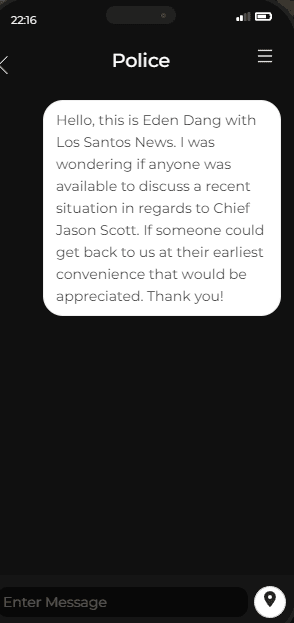
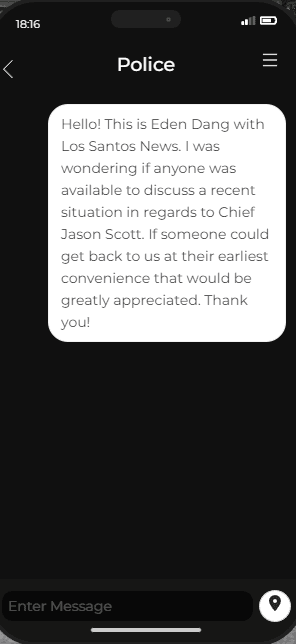
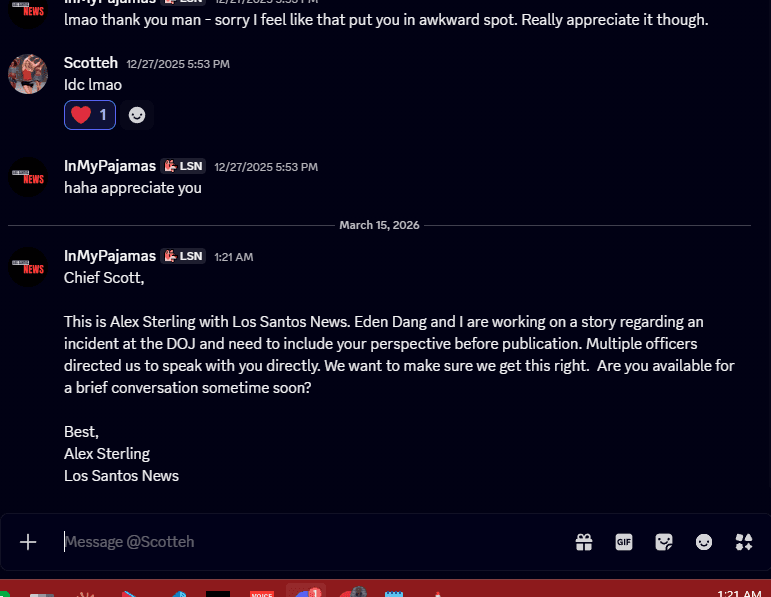
We reached out to the LSPD for an official statement. Repeatedly.
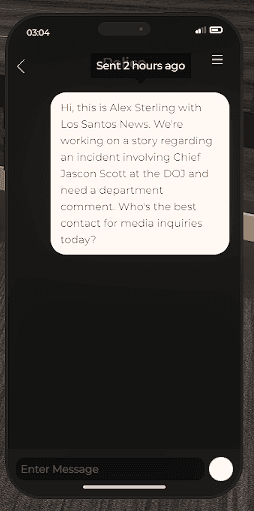
Each time, the department pointed us back to the Chief himself. No press release. No accountability statement. No explanation of what "new police equipment" requires the discharge of an anti-aircraft machine gun in a civilian corridor. The department that would have booked a civilian for this before the smoke cleared has, so far, said nothing about its own leader doing it.
Strip away the noise and the shock value and you're left with one uncomfortable equation.
The same act, performed by two different people, produced two different responses. A civilian firing that weapon would be in a cell. The Chief firing it got apologies accepted, a request for advance notice, and a wall of institutional silence.
That's not a story about one loud afternoon. That's a story about whether the law is a rule or a suggestion depending on who's holding the barrel. Every officer in this city has, at some point, charged someone with unlawful discharge. The Chief runs that department. And the very statutes his officers enforce were fired into the air outside the building where those statutes live.
If rank changes the law, then the law was never the point. And the people of Los Santos — the ones who scattered when the shooting started, who called for an arrest before they knew the name — deserve an answer to the question the attorney asked first.
Does being the chief of police make you above the law?
The street outside the DOJ is quiet again now. Coffee, briefs, parking tickets. The muzzle flash is gone, the casings swept, the panic filed away as a story people will tell for a while.
But the question is still standing where the Chief stood — hands raised, weapon in hand, apologizing for a war machine he had no reason to fire in the middle of his own city.
And Los Santos is still waiting to see whether anyone makes him answer for it.
Feature by Alex Sterling and Eden Dang | Los Santos News
